
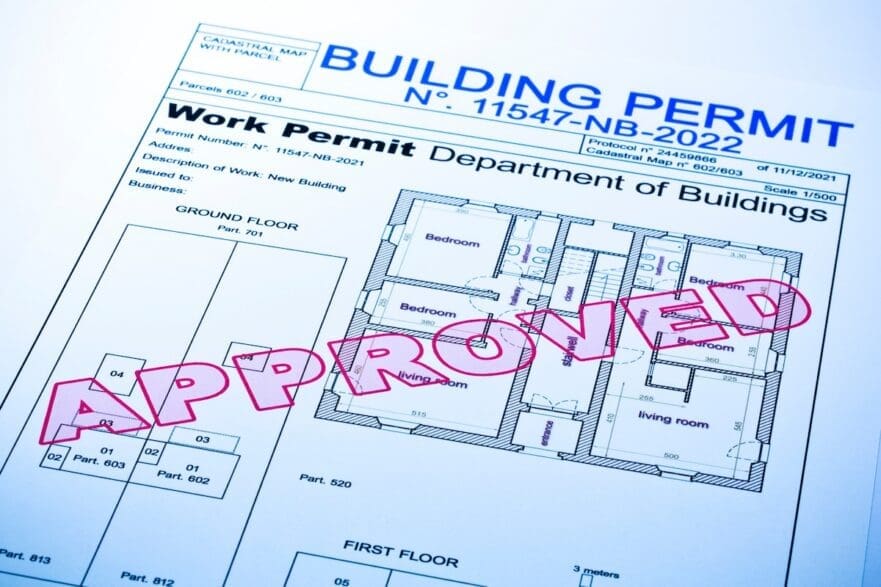
One look at a data dashboard by the California Department of Housing and Community Development shows that the state desperately needs to ramp up the construction of very-low-income, low-income, and moderate-income housing. A key way to make that happen is through a quicker permitting process. It’s why California legislators must pass AB 1997, a state bill that shortens the amount of time it takes for local governments to give permits to developers of lower-income housing.
For decades, the California Department of Housing and Community Development has operated a Regional Housing Needs Allocation program in which the state determines how much new housing at various affordability levels is needed for each region in California between a period of years. Then the state has regional governments break things down further by coming up with how much of that new housing should be built in various localities.
The state has four categories for the new housing that’s needed: very low income, low income, moderate income, and above moderate income. So the California Department of Housing and Community Development may find that, say, 250,000 total units of very-low-income, low-income, moderate-income, and above-moderate-income housing are needed in a region between 2021 and 2029, and a regional government figures out what each locality in that region should have built out of that 250,000.
The Southern California Association of Governments, for example, serves such cities as Anaheim, Riverside, and Los Angeles. For Los Angeles, which has one of the worst homelessness crises in California, the RHNA goals for the period between 2021 and 2029 is 115,978 extremely-low-income and very-low-income units, 68,743 low income, 75,091 moderate income, and 196,831 above moderate income for a total of 456,643.
Los Angeles City Planning does not expect to hit those numbers.
According to a city report, L.A. expects only 33,000 extremely-low-income and very-low-income units out of 115,978 will be built; 29,000 low income out of 68,743; and 10,000 moderate income out of 75,091. The city, though, believes plenty of above-moderate-income, or luxury, housing will be built with 247,000 units – the RHNA goal is 196,831.
Historically, local governments have struggled to hit their RHNA goals for moderate- and lower-income housing for a variety of reasons, including lack of funding and drawn out approval and permitting processes.
The real estate industry, though, routinely uses the RHNA goals as a kind of political weapon to build more and more above-market housing. Corporate developers and landlords rarely, if ever, bring up the need to build more affordable housing for the poor and middle and working class – and neither do YIMBY groups.
But Zillow Chief Economist Dr. Svenja Gudell noted in a 2016 report that “very high demand at the low end of the market is being met with more supply at the high end, an imbalance that will only contribute to growing affordability concerns for all renters. We’re simply not building enough at the bottom and middle of the rental market to keep up with demand… Apartment construction at the low end needs to start ramping up, and soon, in order to see real improvement.”
Ten years later, that still holds true.
The California Department of Housing and Community Development website shows that the state as a whole is shockingly behind RHNA goals for building very-low-income, low-income, and moderate-income units – and Californians still face a massive housing affordability crisis.
Within the next several years, according to the state, 642,151 very-low-income units should be built, but only 5.3 percent have been constructed so far; 384,113 low-income units should be constructed, but only 14.9 percent have been built; and 419,977 moderate-income units should be constructed, but only 10 percent have been built. Above-moderate-income units have done better, but could use improvement: out of the RHNA goal of 1,049,216 units, 338,238 have been built, or 32.2 percent.
As one can see, very-low-income and low-income units, as well as moderate income, are lagging way behind luxury-housing apartments. That’s where AB 1997 comes in.
Introduced by Assemblymember Alex Lee and sponsored by AIDS Healthcare Foundation (the parent organization of Housing Is A Human Right), AB 1997 dramatically decreases the time period that local governments must give permits to lower-income housing developers.
That’s important.
The Southern California Association of Governments noted in a report that “speeding up approvals and permit processing… can expedite the production of housing in a community, and can incentivize infill development and affordable housing.”
The California Department of Housing and Community Development noted on its website that “processing and permit procedures can pose a considerable constraint to the production and improvement of housing. Common constraints include lengthy processing time, unclear permitting procedures, layered reviews, multiple discretionary review requirements, and costly conditions of approval. These constraints increase the final cost of housing, uncertainty in the development of the project, and overall financial risk assumed by the developer.”
So AB 1997 reduces the permitting timeline to 30 days for very-low-income and extremely-low-income units – and developers can more quickly build affordable housing for the poor and working class, who are getting hit the hardest by the housing affordability crisis.
AB 1997 is part of a multi-pronged approach to address the housing affordability and homelessness crises that includes protecting tenants through renter rights, including rent control; preserving existing affordable housing, not demolishing it for luxury housing; and quickly producing new moderate- and lower-income housing.
Hard-working tenants need more affording housing, and AB 1997 is a key way to make that happen.
Patrick Range McDonald is a veteran investigative reporter and the award-winning advocacy journalist for Housing Is A Human Right.